
abdominal exercise, abdominal training, core stability, situp, back
exercise, six pack, crunchies, stomach exercise, slimming aids, flat tummy,
strong abs, strong back, abdominal exerciser
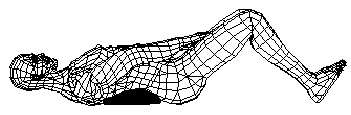
Strong abs go hand-in-hand with a strong back. We now offer total trunk protection
with the introduction of the AbMat abdominal exerciser.The full range
of motion necessary to work the entire abdominal muscle group. Crunch exercises
and most equipment falls short of the AbMat.
Exercise, exertion of the body. In a typical advanced industrial country, it
is estimated that about 40 per cent of adults and 15 per cent of people under
16 years of age take virtually no regular exercise. Despite this, the habit
of taking regular exercise has slowly increased by abdominal training
about 1 per cent a year, in all age groups. This is partly a result of exercise
becoming fashionable from the 1970s on. People up to 29 years of age are those
most interested in playing organized sports, but by far the most popular activities
overall are informal ones, abdominal exercise such as walking
and cycling. In many developing countries, people are more likely to get plenty
odecline reverse crunch twist f exercise: those who are employed
carry out manual, often agricultural work, and their means of transport is usually
walking or cycling. In towns worldwide, and in both town and country in Westernized
countries where cars and labour-saving devices have become widespread many
people have to make deliberate efforts to take exercise. This is now a focus
core stability of public health campaigns. In some countries,
exercise is a vital part of the country's culture, Tai Chi Chuan in China and
cycling in the Netherlands for example. Types of Exercise situp
A typical moderate exercise is walking briskly at about 6 km/h (4 mph). back
exercise Exercises of greater intensity include swimming, racquet sports
such as tennis, and keep-fit or aerobics exercises. Golf, angling (standing
and casting), and canoeing at about 4 to 8 km/h (2 to 5 mph) are six
pack exercises of varying intensity. Daily activities involving moderate
exercise are house-cleaning, reverse crunch climbing stairs,
cycling at about 20 kmh (12 mph), mowing the lawn, house-painting, lovemaking,
playing with children, raking leaves, and dancing. A daily target can be made
up of a combination of these things. crunchies Exercise requiring
mainly stamina is carried out through by aerobic activities, such as running
and swimming. These exercise the large muscle groups at a level that is not
too intense to keep up for 20 minutes or more: for example, a run rather than
a sprint. stomach exercise This type of exercise increases
the demand on the oxygen-carrying capacity of heart, lungs, and legs
up reverse crunch circulation, which gradually adapt and give greater
endurance. Benefits of Exercise Exercise is now also known to be a major contributor
to health and can improve the body in three ways: through increased stamina;
more efficient heart, lungs, and circulatory slimming aids
system, improved muscle tone, through enhanced strength; and more supple joints.
It is also essential to prevent obesity and to help control weight. Suppleness
and strength improve the ability to carry out daily activities, and exercise
in reverse crunch twist moderation can help prevent disability,
especially flat tummy as people get older. They also contribute
to balance and side crunch coordination, which in turn may
help to prevent injury from falls, and other injuries. Weight-bearing exercise
can help to prevent osteoporosis, although care with lifting is necessary to
avoid back injuries. Strong muscles also give a firm, slim appearance. Exercise
is now widely valued for its strong abs capacity to instil
a feeling of well-being; as well as boosting energy output, it discharges mental
stress and physical tension and improves self-esteem. It has been claimed that
exercise can reduce anxiety by distracting the mind from problems. decline
sit-up All this is far more likely to happen if the chosen form of
exercise is enjoyable in itself. strong back A major research
programme carried out in the United States in the 1990s concluded that people
who take regular aerobic exercise acquire some protection against coronary heart
disease, high blood pressure, diabetes mellitus, osteoporosis (fragile bones),
bowel cancer, and depression. abdominal exerciser There is
also evidence that low levels of activity are associated with markedly increased
death rates from a range of diseases. Increased activity, even in middle age,
reduces that risk further. Aerobic training also measurably reduces risk factors
such as obesity (when combined with healthy dietary habits); lowered immunity;
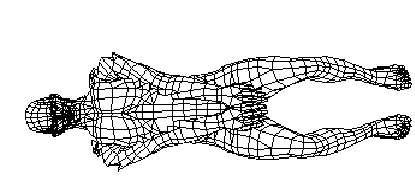
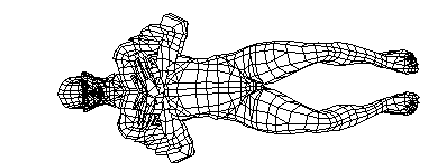
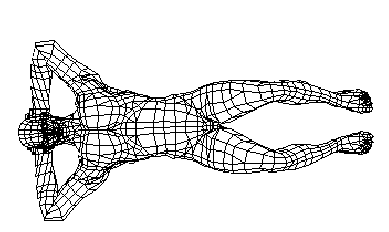
high levels of blood cholesterol, particularly low-density sit-up twist
lipoproteins; high blood fat levels; thrombosis; and irregular heart rhythms.
Although research found that a high level of fitness was not necessary to gain
most of these health benefits, some moderate exercise was regarded as far arm
positions better than none. The results indicated that exercise was
best taken in sessions as short as eight minutes, rather than all in one long
session. These two conclusions are leading to the setting of new, more modest,
targets for public health campaigns worldwide. To gain a satisfactory level
of health, it is thought that a total of at least 20 minutes per day, most days,
of moderate exercise, or, alternatively, enough exercise to burn around 200
calories (837 joules) a sit-up day, is required. This total
can be built up from several short sessions. decline reverse crunch
Regular exercise is preferrable to occasional intense sessions. It therefore
helps to choose something that is enjoyable, and that can blend into daily life.
Typical are walking and cycling instead of using a car, and using the stairs
instead of the lift. It has been recommended that young people, particularly,
should aim to do more than the minimum amount of exercise.